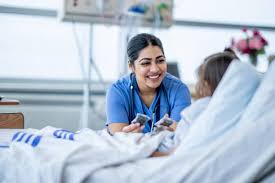
The Ethical Compass: Nursing as the Moral Arbiter of Healthcare
In our previous explorations, we have covered the clinical, technological, and global facets of nursing. However, to truly complete the portrait of this profession, we must look at its most profound and often most difficult dimension: the ethical and philosophical foundation.
While a doctor may focus on the pathology of a disease, write my coursework the nurse focuses on the personhood of the patient. This distinction places the nurse at the center of the most complex ethical dilemmas in modern society. From end-of-life decisions to the equitable distribution of scarce resources, the nurse serves as the healthcare system’s moral compass.
1. The Burden of Moral Agency
Nurses are “moral agents.” This means they have a professional and ethical responsibility to act in the best interest of the patient, even when that interest clashes with hospital policy, physician orders, or family wishes.
The Four Pillars of Nursing Ethics
Nurses navigate their daily practice using four fundamental principles:
-
Autonomy: Ensuring the patient has the right to make their own decisions about their body and care.
-
Beneficence: The duty to do good and act in ways that benefit the patient.
-
Non-maleficence: The commitment to “do no harm”—a complex task when life-saving treatments (like chemotherapy) are inherently painful or toxic.
-
Justice: Ensuring that care is distributed fairly, regardless of a patient’s social status, wealth, or background.
2. Navigating the “Gray Zones” of End-of-Life Care
Perhaps no area of nursing is as emotionally and ethically taxing as the Intensive Care Unit (ICU) or Oncology wards, where the line between “prolonging life” and “prolonging dying” can become blurred.
Nurses are the ones who facilitate Advance Directives and “Goals of Care” conversations. They are the translators who help a grieving family understand that “doing everything” might mean causing the patient unnecessary suffering. In these moments, the nurse is not just a clinician; pay someone to take online class they are a philosopher and a diplomat, helping humanity exit the world with the same dignity with which it entered.
3. The Advocacy Gap: Protecting the Vulnerable
Nurses often serve as the final barrier between a patient and a systemic error. This is known as Patient Advocacy, and it requires immense courage.
-
The Power Imbalance: A nurse may have to challenge a senior surgeon if they believe a surgical site is incorrect or a medication dose is toxic. This requires a culture of “Psychological Safety” where the nurse’s voice is respected as a critical safety check.
-
Social Justice: Nurses are often the first to identify when a patient is being discharged to an unsafe environment (e.g., a person experiencing homelessness being sent out into the cold). The nurse’s ethical duty extends to finding social solutions, not just medical ones.
4. The “Invisible Work” of Emotional Labor
Sociologists often refer to nursing as Emotional Labor. This isn’t just “being nice”; it is the intentional management of one’s own emotions to influence the emotional state of another.
When a nurse remains calm during a massive trauma, or when they offer a steady presence to a patient who has just received a terminal diagnosis, they are performing a high-level professional skill. This labor is often invisible to administrators and insurance companies because it cannot be easily “billed,” yet it is the primary reason patients feel cared for rather than just “processed.”
5. Global Bioethics and the Future
As we move into an era of gene editing, organ bioprinting, and AI-driven diagnostics, the ethical landscape of nursing will shift again.
-
Genetic Counseling: Nurses will play a pivotal role in helping patients understand the implications of genetic testing.
-
AI Bias: Nurses will be the ones to notice if an algorithm is providing biased recommendations for certain patient populations, acting as a human “audit” for machine learning.
-
Climate Health: Nurses are increasingly recognizing climate change as a health emergency, Importance of report writing in nursing advocating for “Green Hospitals” that reduce waste and carbon footprints.
The Holistic Professional: A Summary
To summarize the journey we’ve taken through these five blogs, consider the “Five Ways of Knowing” in nursing, a concept developed by theorist Barbara Carper:
| Way of Knowing | Description |
| Empirical | The science, research, and objective facts. |
| Aesthetic | The “art” of nursing—empathy, intuition, and connection. |
| Personal | The nurse’s self-awareness and their relationship with the patient. |
| Ethical | The moral component—what “ought” to be done. |
| Emancipatory | The social and political change needed to improve health. |
Final Closing
Nursing is a profession that demands the highest level of human excellence. It requires you to be a scientist, an athlete, a scholar, and a saint—all within a single twelve-hour shift.
It is the only job where you can go from the joy of a successful resuscitation to the quiet sanctity of a final breath in the span of thirty minutes. It is exhausting, it is beautiful, and it is the most essential thread in the fabric of civilization.
If doctors represent the mind of healthcare, and technology represents the limbs, online class taker then nursing—without question—is the heart.